

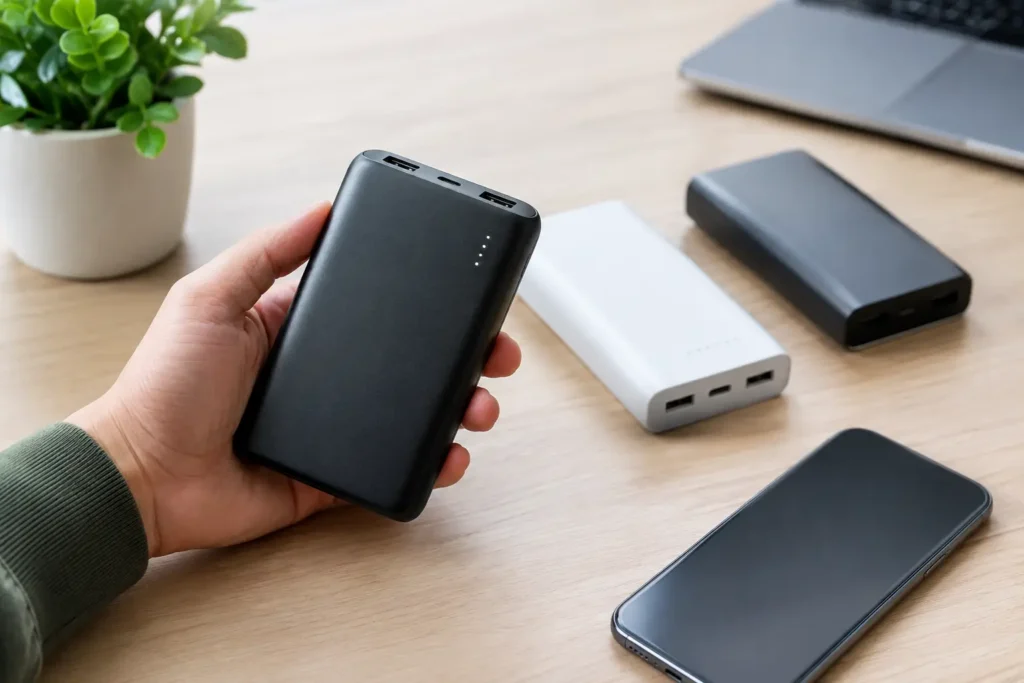
A $15 power bank can be a smart buy. A $15 power bank with a fake capacity rating, no traceable brand, and a suspiciously light plastic case can be a risk to your phone, your bag, and potentially your home. So, are cheap power banks safe? Sometimes. Price alone does not determine safety, but extremely cheap and unverified models deserve more scrutiny than a known budget brand.
The good news is that you do not need to pay premium-brand prices for a dependable portable charger. You do need to know which corners are harmless cost-cutting and which ones are signs to skip the product.
Are Cheap Power Banks Safe to Use?
Cheap power banks can be safe when they use legitimate battery cells, include working protection circuits, and come from a brand that can be identified and held accountable. Many affordable models cut costs in reasonable ways: simpler plastic housings, fewer ports, slower charging speeds, no display, shorter cables, or less polished packaging. None of those things makes a power bank dangerous.
The trouble starts when a seller cuts costs on the battery cells, the charging controller, quality control, or safety testing. Lithium-ion and lithium-polymer batteries store a lot of energy in a small space. A properly designed power bank monitors temperature, voltage, current, and short circuits. A poorly made one may not respond correctly when something goes wrong.
That does not mean every no-name charger will fail or catch fire. Those outcomes are uncommon, but the risk is higher when the product has no credible safety information, exaggerated specifications, or no reliable support behind it. For a device you may leave charging on a desk, in a car, or beside a bed, saving a few extra dollars is rarely worth taking a blind chance.
The Biggest Safety Risks to Watch For
A power bank does more than hold a battery. It also has a charging circuit that controls power moving into the bank and out to your phone. If that system is poorly built, the unit can overheat, swell, stop charging correctly, or damage itself during a fault.
The most serious issue is thermal runaway, where a damaged or defective lithium battery overheats and can ignite. It is rare with reputable products, but it is the reason you should take swollen batteries, strong chemical smells, excessive heat, and damaged cases seriously.
A cheap unit can also be a problem without becoming a fire hazard. Weak voltage regulation may cause intermittent charging. Low-quality USB ports can loosen quickly. A claimed 20,000mAh model may deliver far less usable capacity than advertised. In that case, you may not be in immediate danger, but you still paid for a product that is not worth your money.
Check for Real Safety Certification
For US shoppers, look for power banks that state a recognized safety certification or testing standard. UL, ETL, and TÜV marks can be useful signs, particularly when a product listing identifies the specific standard or provides clear certification details. UL 2054 is one standard associated with household and commercial battery packs.
Still, do not treat a tiny logo on a product image as proof. Counterfeit and misleading certification marks exist, especially on marketplace listings with unclear sellers. A credible brand usually provides a real company name, product model number, support contact, warranty terms, and consistent specifications across its packaging and listing.
A listing that simply says “certified safe” without naming a testing organization is not very reassuring. Neither is a product sold under a random brand name that changes every few months. If you cannot tell who made it or how to contact them, skip this one.
Capacity claims are a useful reality check
Impossible capacity claims are one of the easiest warning signs. A credit-card-size power bank claiming 30,000mAh is almost certainly overstating what is inside. Battery capacity takes physical space, and a genuine high-capacity model will have noticeable weight and thickness.
Also remember that a 10,000mAh power bank does not transfer a full 10,000mAh into your phone. Some energy is lost as voltage is converted and as heat. Depending on the phone and the power bank, usable output is commonly lower than the number printed on the case. Honest brands explain this or publish output ratings in watt-hours, while questionable listings often promise unrealistic numbers and ignore the details.
Warning Signs That a Cheap Power Bank Is Not Worth Buying
Before you buy, read the listing like a skeptic. The product photos and reviews can tell you a lot, but they should not be your only evidence. Be cautious when you see several of these signs at once:
- A capacity claim that does not match the power bank’s size or weight.
- Pricing far below similar products from established budget brands.
- No model number, manufacturer address, warranty, or usable support contact.
- Product descriptions full of vague claims, copied text, or contradictions about ports and charging speeds.
- Reviews mentioning overheating, swelling, failure after a few uses, or a burned smell.
- A listing that combines reviews for multiple different products, making the rating hard to trust.
One imperfect review does not prove a product is unsafe. Every brand has occasional defects. What matters is the pattern. Repeated reports of heat, bulging, charging failures, or a seller refusing returns are enough reason to move on.
A Reasonable Budget Is Better Than the Lowest Price
For a basic 10,000mAh power bank, the lowest price is not always the best value. A modest step up often gets you better cells, a more dependable warranty, USB-C input, and protection against overcharging and short circuits. Those are practical upgrades, not luxury features.
You also do not necessarily need the highest-capacity model. A 10,000mAh power bank is a good everyday choice for most people. It is easier to carry and can usually provide roughly one to two phone recharges, depending on the phone. A 20,000mAh model makes more sense for travel, multiple devices, or long days away from outlets, but it will be heavier.
Fast charging is worth paying for only if your phone supports it and you need it. Check the output in watts, not just phrases like “fast charge.” A USB-C PD power bank with enough wattage for your phone is more useful than a bargain model with several ports that charges everything slowly.
How to Use Any Power Bank More Safely
Even a well-made power bank needs basic care. Do not leave it under a pillow, buried in blankets, or on a hot car dashboard. Heat is hard on lithium batteries, and enclosed spaces make it harder for heat to escape.
Use a decent cable, especially when charging at higher speeds. A worn, bent, or extremely cheap cable can create its own problems and make you blame the power bank. Charge the unit on a hard, open surface when possible, and unplug it if it becomes unusually hot.
Do not keep using a power bank with a swollen case, cracked housing, loose port, leaking material, or chemical odor. Do not puncture it or throw it in household trash. Battery recycling programs and local hazardous-waste services are the safer options for damaged lithium batteries.
It is also smart to avoid charging a power bank unattended overnight, particularly when it is new or from a brand you have not used before. Most good models handle normal charging without trouble, but there is no real benefit to leaving any lithium battery connected longer than necessary.
The Bottom Line for Budget Shoppers
A cheap power bank is safe when the savings come from fewer extras, not from hidden compromises in batteries and safety controls. Buy from a recognizable brand or retailer, look for credible testing information, keep your expectations realistic about capacity, and avoid listings that feel vague or too good to be true.
The best budget power bank is not the one with the biggest number printed on the case. It is the one that charges your phone reliably, stays cool in normal use, and gives you a clear path to support if something goes wrong.